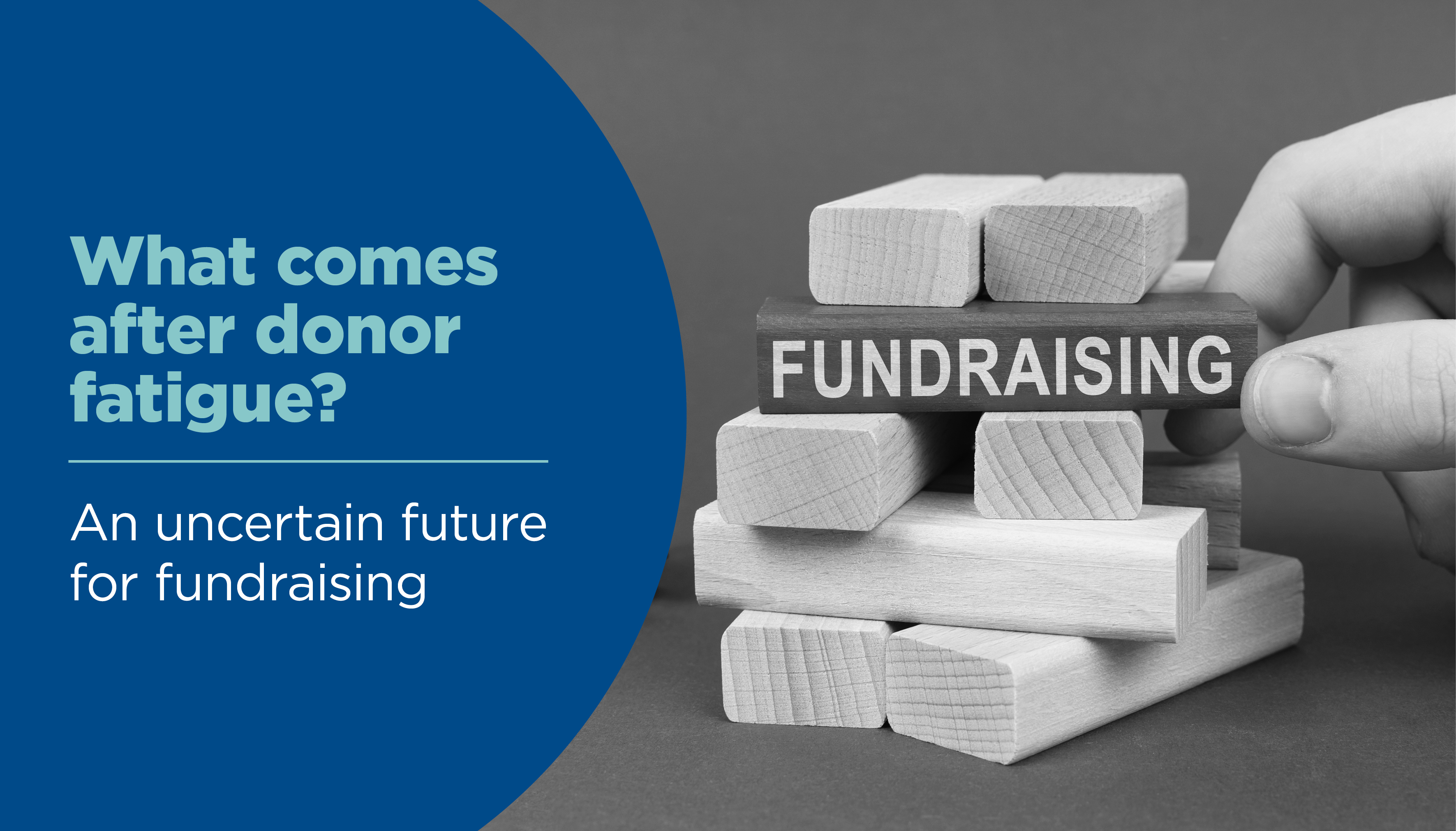
Fundraising is broken. The traditional donor model, built on emotional appeals and one-off gifts, is under pressure as people navigate tighter budgets and digital fatigue.
There are plenty of studies showing how donor retention rates have dropped significantly in recent years, with many supporters disengaging after their first gift, and the valuable microdonor segment (people who donate $100 or less) is disappearing, creating a gap in the donor pipeline. This shift is forcing organisations to rethink how they connect, communicate, and create value.
The future of fundraising isn’t about asking harder, it’s about asking smarter. As donor fatigue rises and generosity patterns change, the organisations thriving today are those re-engineering their approach to exchange and participation.
This article explores why the donor model is broken, what’s driving the change, and how forward-thinking organisations can adapt through value exchange in fundraising, genuine community engagement, strategic corporate partnerships, and funding diversification.
We’ll look at what it takes to design a hybrid funding ecosystem for social organisations, one built on collaboration, creativity, and shared value. Because the next era of fundraising won’t be defined by who gives the most, but by who builds the strongest community around what they give.
Why the traditional donor model no longer works
For decades, charities and social enterprises operated on a straightforward formula: ask a donor, get money, deliver a result.
But that formula is creaking under pressure. One root reason is that donor fatigue is real and rising.
Here in Australia, new research notes that donors are increasingly favouring disruptor causes and spontaneous giving rather than long-term pledging to traditional organisations. The old system assumes donors will come first, give more, and remain loyal through repetitive campaigns, but that assumption no longer holds true.
Supporters today don’t open their wallets if you simply ask them to. They’re looking for relevance, impact, transparency, and a sense of belonging or connection to the cause.
Many charities treat donor fatigue as a numbers game (“we're just asking too often”), but the more important shift is psychological. The modern donor is fatigued, yes, and they’re also reframing what giving means. They’re saying: If I give relationally, I need to feel it, not just see it once a year.
That’s why calls to “diversify revenue” or “just try again harder” aren’t enough. Organisations must move to a mindset of sustainable fundraising beyond donations, building systems where giving is part of a human experience, not just a transaction. Recognising the problem is the first step. The next step is shifting into a model built around value exchange in fundraising, community co-creation, and long-term sustainability.
From donor to supporter: the shift to value exchange
If the old donor model is fading, what replaces it? One powerful alternative is the concept of value exchange in fundraising. Instead of “if you give, we do”, it becomes we collaborate, we engage, we both benefit.
This shift reframes the supporter relationship: they’re no longer just bank accounts to draw from. They’re co-creators, advocates, partners. Organisations that invite supporters to participate in program design, volunteer, or provide feedback create a deeper engagement loop. Research in community engagement shows that offering multiple giving pathways (not just one-off donations) prevents disengagement.
Consider a charity that runs a membership model rather than a single annual ask. By offering regular access to events, behind-the-scenes briefs, and co-design workshops, they transform supporters into active participants. The result? Higher retention, stronger advocacy, and less reliance on constant new-donor acquisition.
Supporters now also expect value beyond the impact of their gift. They want community, identity, transparency, and relevance. That’s why the shift demands a community engagement fundraising strategy, which consistently outperforms simple donation asks.
The deeper shift is designing your mission so the supporter benefits intrinsically. They feel seen, heard, and impactful, not just rewarded. For example, inviting supporters into live Q&As about how their gift is used or co-creating campaign content makes them part of the mission, not just funders of it.
When you do that, the phrase transforming donors into advocates stops being aspirational and becomes operational.
Smarter strategies for the next era of fundraising
A smart move is adopting a community engagement fundraising strategy that actually lets supporters plug in, not just hand over cash. A recent analysis in The Chronicle of Philanthropy explains how the donor pyramid model of top-down giving is being replaced by a donor vortex, where communities drive peer-to-peer momentum.
1. Corporate partnerships in nonprofit funding
If you’re treating a corporate sponsor like a one-off cheque, you’re missing out. Contemporary corporates want co-creation across data, narrative, activation, and brand synergy. In Australia, reports show that businesses are increasingly seen not just as funders but as delivery partners.
2. Grants and funding diversification for charities
Relying on the next big appeal or single major donor is like building on sand. Organisations that spread their revenue across sources ride out storms far better. Consider recurrent revenue streams for nonprofits like memberships, subscription services, or social enterprises– avenues beyond donate now triggers. The key is to treat diversification as mission design, not a financial afterthought.
3. Data-led storytelling and value exchange
The phrase value exchange in fundraising isn’t just corporate speak. Digital fundraising research shows that campaigns offering something meaningful back to the supporter, be it community, identity, or participation, convert more effectively.
If you’re still running one-way asks like give now, you’re ignoring the fact that people want to belong. The smart strategy blends narrative with data: who your supporters are, what drives them, and how they can engage.
The strategic question becomes: Why would someone invite themselves into this? When you design.
The new fundraiser mindset
In this next era, your role isn’t asker in chief. You’re a community builder, a value designer, an ecosystem architect. That’s the nonprofit fundraising mindset shift, from transaction to transformation.
Build your hybrid funding ecosystem for social organisations
Donor fatigue, economic stress, and oversaturation mean you can no longer depend purely on individual givers. Organisations that thrive design a hybrid model: a mix of donors, grants, earned income, memberships, corporate partnerships, and community co-creation. This hybrid approach offers greater resilience when one income stream dips.
Shift from competition to collaboration
The traditional mindset pits you against other charities for share of wallet. The new one focuses on collaboration, building sectors, networks, and coalitions that complement rather than compete.
Embed transparency, co-creation, and voice
Supporters no longer accept being spoken to; they expect to be involved. Invite them to influence your communications, membership benefits, and program design. When supporters move from passive to active, ask-resistance disappears.
Treat your funding system like your brand. Brands are built on identity, belonging, and movement. Your fundraising ecosystem should be the same. Donors aren’t just funders, they’re part of the engine. Designing for belonging creates advocacy, recurring support, and organic growth.
The future of fundraising
The future of fundraising isn’t about asking harder, faster, or louder. It’s about offering more. More connection, more engagement, more co-creation, more value. When you accept that the donor model is broken, you free yourself to build something that lasts.
You’ve seen why the traditional approach is failing. You’ve explored how to shift from donor to supporter via value exchange in fundraising. You’ve mapped out smart strategies (community engagement, diverse funding streams, corporate partnerships) and adopted a new mindset as a value designer and ecosystem architect.
Now is the time to act. If you’re ready to rethink what your organisation asks for and shift into what it offers, let’s talk about the next chapter of giving. Because when you build a system people invite themselves into, giving isn’t work. It’s inevitable.