
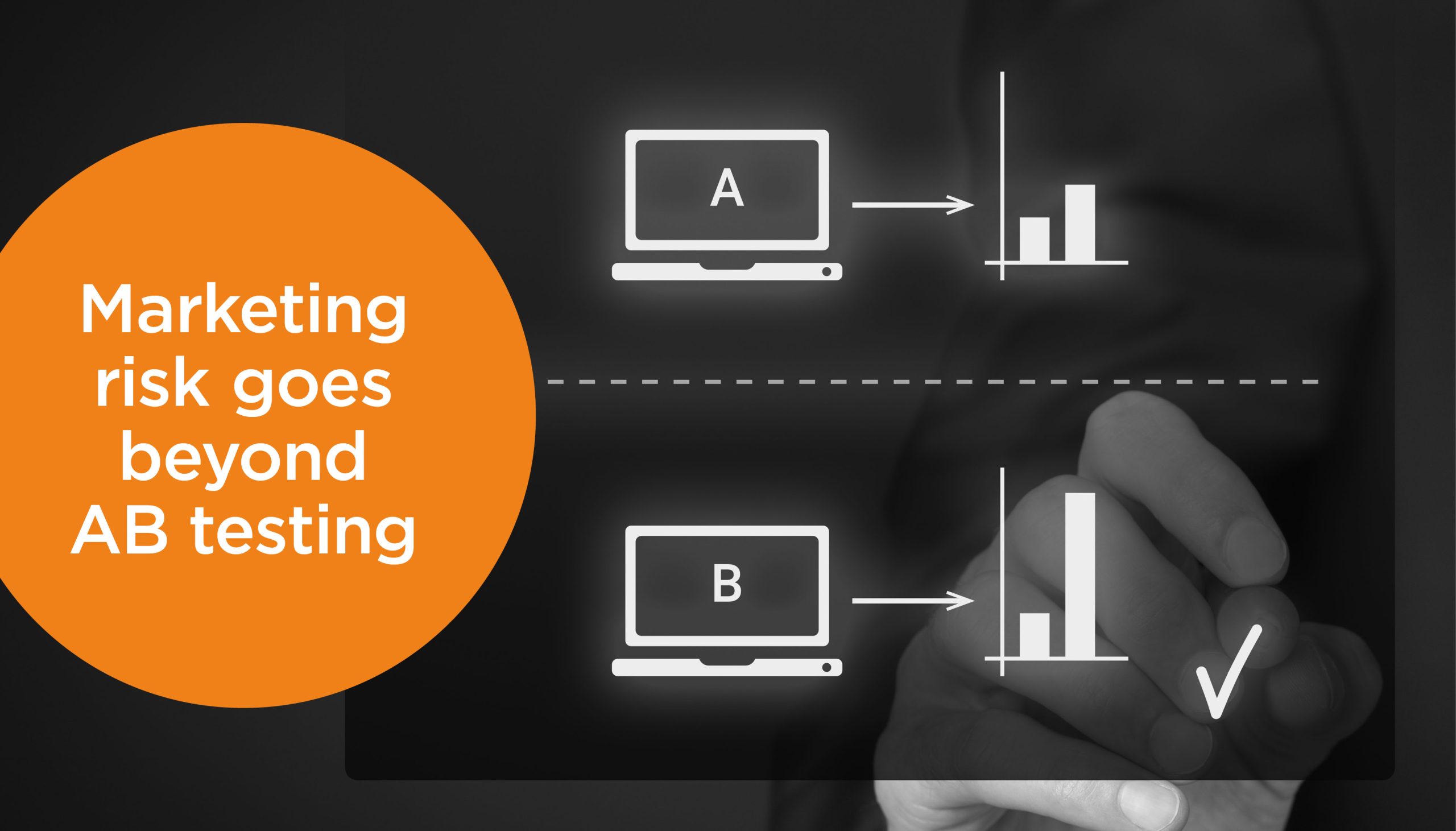
If you had to stand up in front of a boardroom today and talk about marketing risk assessment, what would you talk about?
Campaign success most likely. A/B testing, conversion rates, and ROI.
But these days, marketing risk is a lot deeper than optimising any single given campaign. It’s about brand reputation, organisational competitiveness, market positioning, and long-term commercial viability.
Asking “Did this campaign work?” isn’t good enough. Instead, we need to ask “is this the best investment for what the organisation is trying to achieve?”
Marketers need to expand their understanding of risk so that they can provide high level strategy support to organisations under increasing amounts of pressure to priorities where their marketing budget is allocated—whether that’s investing in channel partners and resellers, or running fewer but more strategic campaigns.
The limits of traditional marketing risk assessments
Historically, risk assessment in marketing has simply referred to performance testing. Marketers have focused on:
- A/B testing creative and messaging
- Tracking conversion rates and engagement metrics
- Analysing customer acquisition costs and return on investment (ROI)
While these metrics are useful, they only tell part of the story. They measure short-term success but don’t account for broader risks that affect an organisation’s sustainability and reputation.
The bigger picture: marketing as a business risk
Risk in marketing should be considered in a way that aligns with an organisation’s overall strategic direction. A more comprehensive approach should factor in:
- Brand reputation risk: The potential for a campaign to be misinterpreted, backfire, or attract negative media attention.
- Competitive positioning risk: Whether marketing decisions strengthen or weaken an organisation’s position in the market relative to competitors.
- Commercial viability risk: Whether marketing investment is optimally allocated to drive long-term business success, not just short-term campaign wins.
- Regulatory and compliance risk: Particularly relevant in industries like healthcare, finance, and non-profits, where marketing claims must align with legal frameworks.
On the career side, speaking the language of business risk will help marketing leaders claim a seat at the executive table. On the impact side, an idea, strategy, or campaign is more likely to be supported by stakeholders when a risk assessment has already been completed.
When conducting or presenting a marketing risk assessment, here are some key considerations to include:
- Financial forecasting risks: Do your proposed marketing investments align with business sustainability, avoiding over-reliance on short-term gains?
- Reputation management: Have you anticipated and prevented any potential PR crises by monitoring sentiment and proactively addressing potential brand issues?
- Market adaptability: Is the brand positioned to be resilient in evolving industry landscapes, such as economic downturns or regulatory changes?
Having these conversations takes marketing from a cost centre and allows it to become a strategic function that supports business growth.
Risk considerations for non profit and B2B organisations
Remember, risk is not one-size-fits-all and different industries will need different focus areas in their marketing assessments.
Non-profits
Messaging must align with donor expectations, ethical storytelling, and regulatory compliance.
B2B organisations
Risks include long sales cycles, brand trust, and differentiation in a saturated market.
Healthcare marketing
Strict compliance regulations make misinformation and misleading claims a significant risk.
A non-profit, for example, might face reputational damage if marketing campaigns unintentionally misrepresent the impact of donations. A healthcare company will have strict legal standards to meet around marketing claims.
Commercially savvy marketing investments
Marketing strategy isn’t just about getting as much visibility or as many sales as possible. When done correctly, marketing strategy involves assessing which areas of the business will deliver the highest returns.
A commercially-savvy marketing strategy will include asking questions like:
- Reevaluating campaign frequency: Is the organisation better off running two extended campaigns a year rather than four smaller ones?
- Investing in distribution: Would a stronger focus on channel partners and resellers be more impactful than increasing direct-to-customer advertising?
- Prioritising sustainable brand growth: Are marketing efforts aligned with long-term brand positioning rather than just quarterly KPIs?
A framework for comprehensive marketing risk assessment
To shift marketing risk assessment beyond A/B testing, organisations need a framework that incorporates both performance metrics and broader business considerations. A well-rounded risk assessment should include:
- Performance data – Traditional campaign metrics such as engagement rates, conversion rates, and ROI.
- Brand perception analysis – Sentiment analysis, PR risk evaluation, and social listening tools to track brand reputation.
- Competitive benchmarking – Understanding how a campaign or strategy positions the organisation in its industry.
- Investment impact assessment – Evaluating marketing spend against business-wide financial goals and priorities.
- Scenario planning – Identifying potential risks and preparing responses to mitigate negative outcomes.
How to start mitigating your marketing risk
Ready to start embedding a deeper level of risk awareness into your marketing and decision making? Here are some key steps to get you started.
- Assess brand perception regularly – Use sentiment analysis and media monitoring to gauge how the brand is perceived.
- Align marketing with business goals – Ensure marketing spend is justified within the organisation’s broader strategic framework.
- Anticipate reputational risks – Identify potential public relations risks before launching campaigns.
- Evaluate marketing investments holistically – Compare different allocation strategies (e.g., paid ads vs. partnerships) for long-term impact.
- Foster cross-functional collaboration – Work closely with finance, legal, and operations to ensure marketing initiatives align with business risk management.
Marketing risk assessments need to move beyond campaign performance metrics to encompass broader business risks. A truly strategic marketing function understands and mitigates brand reputation risks, ensures commercial viability, and strengthens market competitiveness.
To stay relevant at the C-suite level, marketers must integrate commercial acumen into their decision-making. That means asking the hard questions—not just about what will drive the next campaign’s success, but what will drive the organisation’s success over the next five years.
Looking for a risk-aware marketing partner? Book your free 30-minute consultation today.