
Table of Contents
All hail video, king of content marketing.

People love watching video. It’s a fact. As the preference for video content grows and different platforms adapt, more and more marketers are incorporating it into their content strategies. And rightly so.
Although the numbers do vary slightly, video marketing is showing some incredible results, like a 54% increase in brand awareness and 66% more qualified leads per year. 73% of consumers report being influenced by a brand’s video-heavy social media presence when making purchase decisions, and 93% of marketers attribute landing a new customer to video content. Best of all, the returns on video marketing and video ads are, reportedly, very satisfactory.
People are starting to value video beyond its entertainment value too. This 2018 study by Hubspot found that 54% of people want to see more video content from brands - not just for entertainment’s sake, and video content was also voted as consumer’s favourite type of content to see from brands on social media.
If you’ve been wondering whether it’s time to include video in your marketing strategy (yes it is) and where on earth to start, you’re in the right place.
This guide will take you through exactly why video content is so good, the main types of video content and how to best use them for marketing, SEO for video, which metrics to look at, and a whole lot more. Don’t forget to print out the handy SEO checklist and keep it next to your desk for when you’re ready to start uploading and optimising your fresh content!
Why exactly is video content so good?

Okay, so the numbers have shown that video marketing is worthy of being a heavyweight in your marketing mix. But why exactly is it so good? What do those numbers really mean?
You’ve probably read or heard that video marketing is ‘easy for people to digest’. Every wondered why?
Consuming video content feels effortless because our brains process videos tens of thousands of times times faster than text. It’s not that reading is hard, it’s that video provides us with a mix of verbal and non-verbal cues. We’re able to observe aural and visual cues like body language, tone, movement, and colour, in addition to the information being communicated.
Video content is easy for us to digest because it’s so similar to the way visual and aural cues are perceived while navigating the real world.
This ease underpins a whole lot of other benefits. People will often skip forward audio content, or skim read written content. It’s less likely to see someone skipping forward video content though! And since people aren’t skipping or skimming video content, having video on your site increases dwell time by 88%, which boosts your SEO by improving your site’s authority.
Types of video content and how to use them in your marketing

HOW-TO VIDEOS
Useful content is the underlying premise of content marketing. It positions you as an expert and gives consumers a reason to engage with your brand even if they’re not ready to buy – thereby making them more likely to come to you when they are.

EVENT VIDEOS (PRE AND POST) & LIVE VIDEOS
Short hype videos can bring incredible results when you’re trying to promote an event. Leverage footage from the night to feed into your social media and marketing for your next event. Using live videos can also help you engage in real-time with exponentially more people than you could cater to in a physical event. It’s also a great way to make best use of high profile interviews, awards, and ceremonies.

DISAPPEARING VIDEOS
Such as those found on Snapchat and Instagram and Facebook stories, create the ever-effective sense of urgency. They also allow brands to get creative and playful, with the use of filters, stickers, and other embellishments.

CASE STUDY AND TESTIMONIAL VIDEOS
Just like a testimonial, only better. People are much more likely to believe something positive about you if someone else is saying it. It makes sense to present the good stuff in a format that people are engaging with. Being able to hear someone’s voice and observe their body language also gives a whole extra level of credibility to the testimonial.

STYLED PRODUCT VIDEOS
ou’ve likely come across these on Instagram. Think time lapse or stop-animation style videos showcasing products.

BRAND VIDEOS
Often used as part of a wider campaign, brand videos are effective for creating brand awareness and communicating brand personality, as well as increasing traffic. Perfect for engaging with people at the top of the sales funnel.

EXPLAINER VIDEOS
Can be used to explain your product, service, or business model in a fun and memorable way. The Dollar Shave Club is a great example: it’s simultaneously entertaining and explains their unusual business model.

WEBINARS
They are great, with 40-60% of registrants being qualified leads. Once you’ve completed your webinar, think about how else you can leverage that content. Cut it down into 2-5 minute topical snippets and share them on your social media and YouTube. You could also embed them in your own relevant blog posts to increase dwell time and engagement. You could also use the material to create a mini series, send it in an automated email sequence and use that ‘course’ as an opt-in.

USER-GENERATED CONTENT
Running out of ideas? Chances are your audience has a few new ones! Social media platform TikTok is a fantastic way to get fans involved by creating fun challenges that encourage creativity. There are other benefits to user-generated content too. Users make videos for the sake of it, for creativity and entertainment. It’s easier to trust a video made by someone not trying to sell you something. Plus, assuming they’re proud of their work, they’ll share it all over their social media network.

ANIMATED GRAPHICS
While not everyone would consider these technically video, they deserve an honourable mention for their ability to engage, delight, illustrate information, and increase dwell time.
Video at every stage of the funnel

 Lead Generation
The number of ways to collect leads from your website is limited only by your imagination (and technical ability).
More commonly, you’ll see email freebies with opt-in forms, or pop-ups prompting users to hand over
their email addresses. Did you know you can embed a form inside a video? Videos with forms in them have a 16% conversion rate. Want to boost that even higher? Put your form in the first 20% of your video, and that conversion rate should spike up to 43%.
Embedding your forms is visually neat and doesn’t interrupt the user experience of your site. While we don’t recommend embedding forms in every single video you publish, use your discretion in the same way you would decide whether (and where) to include a CTA in a blog or other type of content.
 Lead nurturing
Every lead you have will be at different stages of the funnel. To make sure they’re seeing appropriate content, you first need to identify where they are.
For leads in the awareness stage, it’s best to send educational videos. Provide them with interesting, helpful education and build up their connection to your brand. If you jump in with product demonstration videos at this point, they’ll likely lose interest as they don’t see the relevance to themselves (yet).
When those leads have reached the decision stage, then you can nudge them towards buying. In this stage, they likely have a shortlist already and are close to making a decision. Strike while the iron is hot by sending them through some sales enablement content like testimonials, free trials or samples, or case studies.
This phase is also an excellent opportunity to create different videos for your different buyer personas that cater to their specific interests and needs.
 Engagement
Video engagement rates are higher than any other type of content: video content is shared on Facebook seven times more often than links. There are also increasing numbers of tools and social media platforms increasing engagement rates.
One method which is particularly relevant to marketing is adding some interactive element to your videos. Much like a self-guided game, your video could allow leads to click onto objects to learn more about them, or branch into different content streams depending on the user’s input. While these videos may require more resources to create, they can be more cost effective in the long term.
Imagine a single (interactive) video that’s capable of showcasing different features of your product to the people who are most interested in each one. You can allow people to skip to the features they’re interested in and add small pop-up buttons offering to show them more information about the other features, allowing your buyers to guide their own journeys through your funnel.
 QUALIFYING LEADS
There are 3 ways to score your leads based on their viewing behaviour.
 Closing the deal
When you’ve put in the time and effort to get a lead to the decision phase, they still often need a final push. At this stage, FAQ videos, testimonials, and company videos can be the missing piece to cement their faith in you enough to convert.
Benefits of using video on landing pages
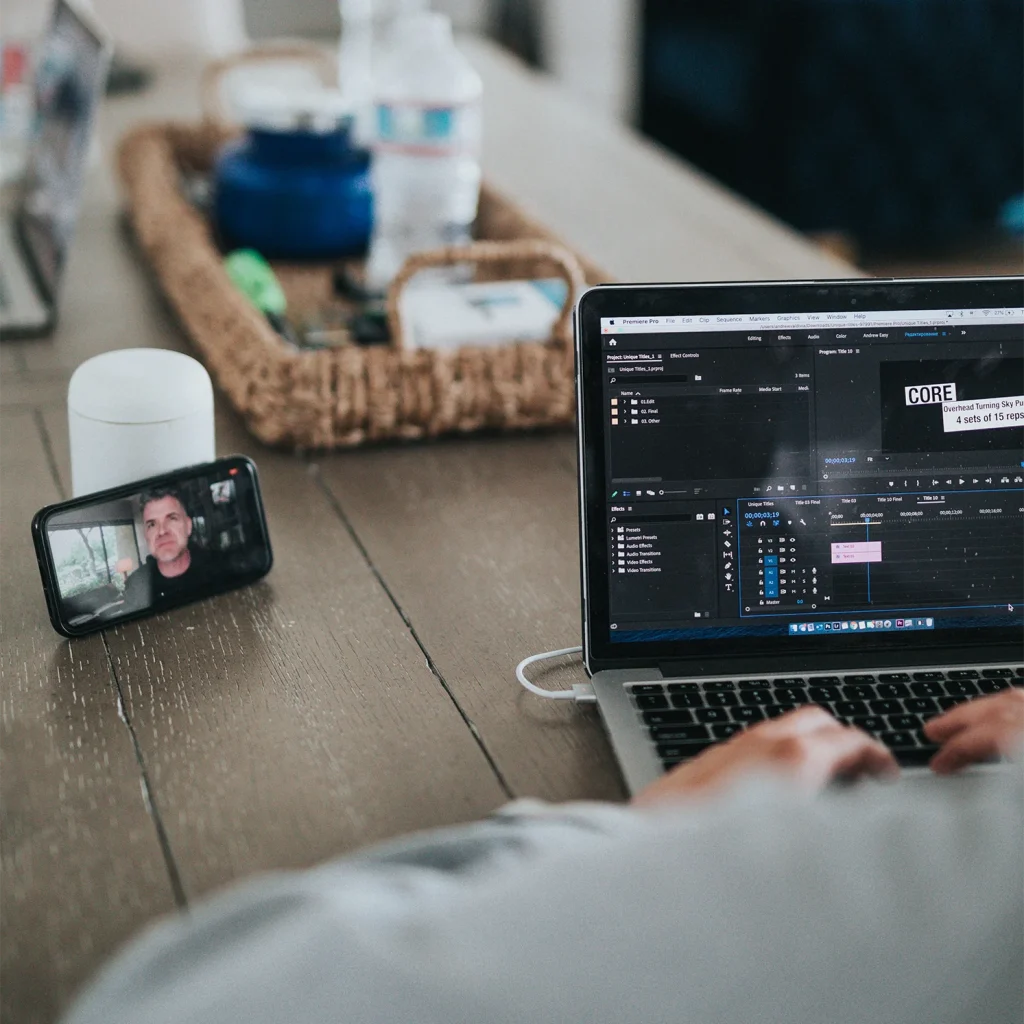
For all the benefits of video marketing, the underlying factor is that it’s easy. Site visitors can absorb your ideas without having to read a word. Plus, it’s much easier to create a powerful emotional experience with the use of graphics and sound, much more so than just with images and text.
Creating that emotional connection is one of the biggest challenges of marketing, but also one that pays off exponentially. There are also substantial SEO benefits - landing pages with video are 53% more likely to appear on the first page of search results! (Check out the SEO section for more information.)

Don’t go too complex.
Yes, video is an accessible medium and a great tool for explaining more complicated concepts, but don’t forget that people will only absorb so much. Even complex ideas can be explained simply!
Don’t give your viewers mixed messages.
Just like in your other marketing collateral, it’s important to have a clear goal in mind and shape your video for that goal. Your goal needs to be clearly defined from the get-go, and you need to ensure your scriptwriter, director, producer, animator, and whoever else you have involved all clearly understand it.
Don’t forget a CTA!
Even if you’ve fully convinced your viewer, if you don’t give them a way to convert, they won’t. Give them something to click.
As always: avoid industry-specific jargon.
(Unless you want to exclude a lot of people.)
Autoplay.
Autoplay can be intrusive and disrupt a user’s interaction with your site as they scramble for the volume key. Entice them with catchy copy, an intriguing thumbnail, and a prominent play button, but give them control over pressing play.
7 steps to increase your sales with video

Step 1
DECIDE ON VIDEO LENGTH
People don’t skip video content, so that means you can take the opportunity to cram a lot of information into one video, right? Not exactly. People still have quite short attention spans. So short that a study found 1-2 minutes to be the ideal length. It’s short, but plenty of time for you to go through 3 or 4 main point.
Step 2
POST YOUR VIDEO ON YOUTUBE
Did you know YouTube is the 2nd most visited website? Take advantage of all the traffic moving through to capture some more views. It’s also free to make an account, and you can host your videos there then embed them in your blog posts.
Step 3
OPTIMISE FOR SEO
We’ll dive into this in detail below, but for now just know that SEO for videos is as important as for your blog posts and website!
Step 4
CRAFT VIDEOS PEOPLE WANT TO SHARE
What makes videos go viral? A study on viral videos found the two most important factors are storytelling and emotions. If you can put together a video that does both, that evokes a strong emotion and tells a story, your chances are good. Don’t forget to make sure your video complies with the requirements for the various platforms, and include social media sharing icons.
Step 5
PERSONALISE YOUR VIDEOS
This can mean using your viewer’s name and job title throughout the website,
or including screenshots of their website as your explain something. While it might sound like a lot of effort, various studies have found click through rates to increase by 200% all the way up to 600%. Results vary, but they’re always impressive.
Step 6
INCLUDE A CTA
A marketing axiom. If you want someone to do something, ask them. This is the key step to closing the sale - providing the link or button for people to click!
Step 7
OPTIMISE FOR MOBILE
Consumers these days complete a variety of important tasks from their phones, including purchasing things and booking appointments. Make sure it’s easy to do so from a mobile device. Make sure your video still looks good on different screen sizes and without sound - 85% of video content on Facebook is watched with the sound off, so consider using text or subtitles to get around this.
Seo for video


Video should be part of your content marketing strategy. Just like with your blog posts and articles, SEO is essential so avoid simply creating endless content and putting it out into the void.
There are certain guidelines to optimising your videos for SEO and giving them the best chance to drive traffic to your site and boost conversions. Although we’ve touched on them lightly already, here’s a more thorough look at all the benefits of video SEO:
Improve dwell time on your site. According to SEMrush, dwell time is the second-most important factor taken Increase your click through rates. Video results appearing in SERPs (search engine results pages) are more attractive than text based results and are more likely to get the click.
Decrease your bounce rates. Not only does video grab attention immediately, it also can more clearly explain your site, capturing that portion of searchers who’ll exit immediately if they’re not sure about the site. Search engines interpret lower bounce rates as more positive user experience, which can boost your rankings.
Strengthen your keyword strategy. Including a description (or even transcription) below your video will give Google more text that includes your chosen keywords to index and increase your chances of appearing higher up in search results.
Get more backlinks. Great video begs to be shared. People are more likely to share (and create backlinks to your site) if you have an evocative, funny, or useful video. Backlinks drive more organic traffic to your site, and also increase your site’s authority in the eyes of Google.
YOUTUBE, VIMEO, OR SELF HOSTED?
You can host your video either on your own site, or on a video hosting platform like YouTube or Vimeo. We recommend you do both. Hosting your video on YouTube or Vimeo allows you to take advantage of all
their established traffic. YouTube and Vimeo both have relative advantages.
YouTube is simply bigger, with 82% of video search results pulled from there. Vimeo on the other hand, is ad-free and more professional, which might
be important if you’re considering your brand’s reputation. You can also now customise your Vimeo player to match your brand or campaign colours. If your video is hosted on a streaming platform, you can still embed it on your own site, allowing visitors to enjoy it without the distraction of all the other videos.
BEST PRACTICE
Wherever you decide to host, optimising your video for SEO is similar to optimising a blog post or web page. It’s all about making sure that search engines can find the appropriate information and making sure people want to click through.

TITLES AND DESCRIPTIONS
Write titles that hook viewers in and include keywords, and descriptions that clearly explain the topic and value of the video. Common video search terms are ‘how to’ and ‘review’, so include those if appropriate.
Video provides a number of opportunities to give search engines more keyword-rich text to crawl, namely closed captions, and scripts and transcripts.

TRANSCRIPTS AND CLOSED CAPTIONS
If your hosting platform doesn’t have an option to include a transcript, you can include one in the description box or just underneath the video on the page. Just like audio should be optimised for listening, transcripts should be optimised for reading and skim-reading, so keep this in mind while editing. It’s okay if your transcript doesn’t match the written script word for word. That being said, remember that search engines will be indexing your script, so make sure it includes plenty of (natural sounding) keywords!
Adding closed captions is a great idea. Not only does it make your content more accessible, it also means people scrolling with the sound off can still engage with your content. Plus, Google crawls the text, which means even more keyword-rich text is boosting your SEO efforts. Although some platforms may have automatic captioning available, make sure you check and edit these, as they’re often incorrect.

THUMBNAILS
Thumbnails play a huge part in whether people will choose to click or not, so don’t leave it to chance. If you’re hosting on your own site, you can define exactly which second in the video should appear as the thumbnail (or get a web developer to help you if grappling with HTML is beyond you). If you’re hosting on a streaming platform, you can upload any image to use as the thumbnail, it doesn’t have to be a still from the video.

Tags
If you’re hosting on a streaming platform, you’ll have the option to include tags in your video. These tags help the platform group your content with other relevant content and make smarter suggestions to viewers. Viewers don’t see these, so go ahead and include as many keyword variations as you can think of.

ENGAGEMENT
Don’t be shy. Ask for the ‘like, comment, subscribe, or share’ at the end of your videos. Platforms use engagement metrics to determine whether users are enjoying the content, so it’s worth taking the extra second to encourage some engagement.
SEO for video checklist

Print out this handy checklist and make sure you’ve ticked all the boxes when optimising your videos…
HOSTED ON YOUR OWN WEBSITE
- Put your video at the top of the page
- Include keywords in your video name
- Include a brief (roughly 160 words) description
- Define thumbnail URL
- Publish a transcript (on the same page)
- Give the video its own page with appropriate title, description and header tags
- Add closed captions
HOSTED ON A STREAMING PLATFORM
- Write an attention grabbing title that includes keywords
- Clearly explain your topic in the description
- Include keywords in the description
- Use your topic as tags
- Include a transcript
- Grab attention in the first 10 seconds
- Choose an intriguing thumbnail
- Add closed captions
- Encourage engagement
Where to distribute video
With all the different types of video, it can be tricky at first trying to figure out what to publish where. While there are no hard and fast rules, there are a few common-sense guidelines that will help you decide.

ON YOUR WEBSITE AND LANDING PAGES
Using video on your website and landing pages brings plenty of SEO benefits, as outlined in the section above. Your website is a good place to put evergreen video content that won’t need to be updated too often. Think about something informative, non-time sensitive, and interesting.

IN YOUR EMAIL MARKETING
Using video in an email can increase click through rates by 96% and decrease opt-outs by 75%. In fact, even just using the word ‘video’ in the subject line can bring substantial benefits, increasing open rates by 19%. Assuming your emails are already personalised, imagine the impact of sending out personalised email content to your list!

Blogs
The benefits of having video on your blog are more or less the same as having them on a website or landing page. If you’re incorporating guest blogging into your SEO strategy and are submitting blog posts to partners, including a short video could increase your chance of getting shared. After all, you’d be providing them the benefits of video and saving them the effort of making it themselves.

PRESS RELEASES
As with blogs, you’re greatly increasing your chances of your release being shared on a site if you’re giving them video benefits.

From a numbers perspective alone, Facebook’s 2 billion users could rival YouTube, but there is one advantage. Everyone on Youtube is posting video. Your videos on Facebook are competing with image and text based posts too - which makes them stand out even more.

YOUTUBE
Youtube has over 2 billion active users. Take advantage of the people already spending time on the platform. Remember that YouTube is designed to suck people into black holes of related videos though, so use your channel to drive people back to your website.

OTHER SOCIAL MEDIA PLATFORMS
Every social media platform these days has some kind of video capability. LinkedIn has embraced video lately, as has Twitter, Instagram has always been a visually driven platform, and TikTok is video-only. Just make sure you double check the specifications for each platform instead of blasting the same one out and getting subpar results.
How to track ROI

Once you’ve gone to all the effort to plan, shoot, and distribute some video in amongst your other marketing efforts, your CEO might come back and ask “is it working?” Here’s how to prepare to answer that question.
As with any marketing effort, the first step is to set some goals to help you determine which metrics to look at. Your goals could be increasing traffic, generating or qualifying leads, or building your email list.
Metrics to look at:
- View count. How many eyeballs are you getting, and (importantly) do those eyeballs belong to your target audience?
- Attention span data. How far through are people watching the video? Aim for a video completion rate of at least 60%.
- Click through rate. This is calculated by dividing the number of views by the number of people who clicked. (Don’t forget to give them something to click!)
- Finally, integrate your video with your CRM and automation platform to see detailed reports and find out whether they’re driving leads or sales.It’s short, but plenty of time for you to go through 3 or 4 main point.
Conclusion

If you’re ready to include video into your strategy (and with 60% of content marketers and 87% of marketing professionals already using video - can you afford not to?), contact MIH today to discuss how to propel your marketing strategy into the future and boost your business growth.
After all this, you must be feeling motivated to jump into your video content plan. Except for a few blocks.
Here’s why those blocks don’t matter as much as you think.
- “We don’t have time to shoot and edit video.” Actually, you can even shoot simple videos on your smartphone. Start simple and small. You can do it.
- “We can’t afford to shoot video.” Actually, most
- companies spend less than 10% of their marketing budgets on video content. Plus, you can start out shooting on your phone and using any of a number of free video editing tools available.
- “We’ll need to hire professional actors or models.” You could. Or you could get authentic and shoot using your employees. You never know who might love to be on camera!
- “Okay...but it’ll have to wait until we develop a proper strategy.” Better done than perfect. Start with an idea, see what works for you, and refine your strategy from there.
Bonus interview with video producer Andrew McLean
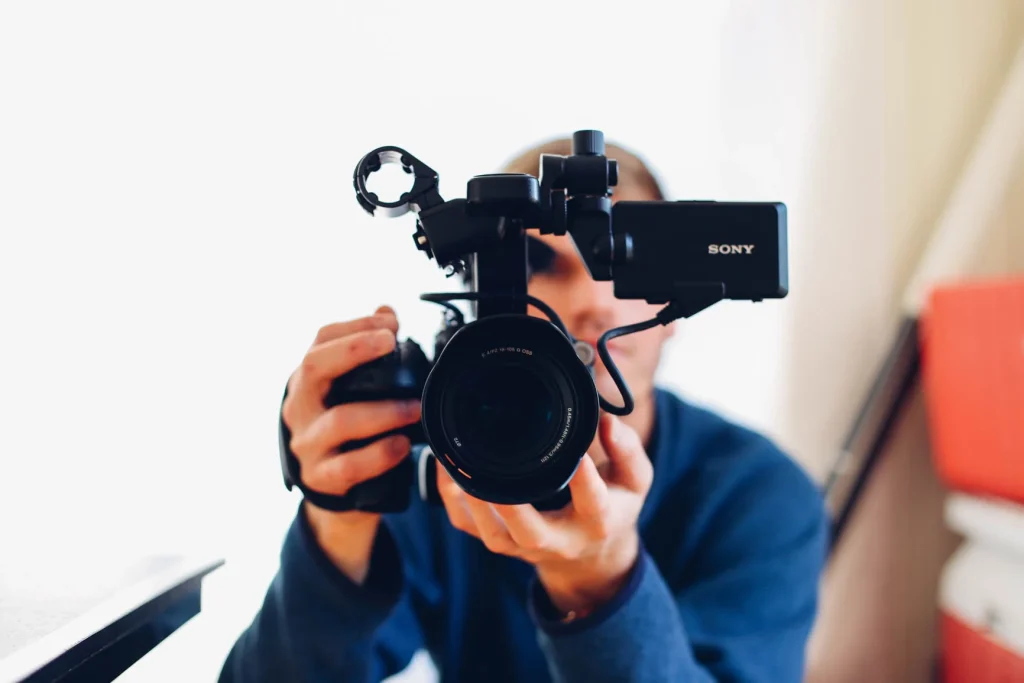

SUPER STYLED VIDEOS VS MORE ORGANIC VIDEOS: WHICH IS MORE EFFECTIVE?
I think the answer to this always has to come back to the audience. It would be easy for me to say that one style or the other is more effective, but in all honesty it’s not.
As much as we’re producing video for a large audience, in essence we’re actually only producing for a very narrow group of people - potential clients. As such it’s important to realise that out of the thousands of people that might watch the video, we’re really only looking to engage the 10% of those people who could be interested in engaging with our message. Every industry has a different audience.
For example, a medical audience is different to a tourism audience. Those in the medical field might want to see a very direct, instructional piece with crisp footage of the procedure, a step by step voiceover and well formulated animations of new technology. In contrast to this, a tourism audience is looking to be inspired, so a video series that captures their wanderlust and engages them with stunning imagery would work here. In this instance the tourism video is more produced, as we’re stepping into our psychologist shoes to decide how to manipulate the audience’s moods and behaviours.
In saying this, I do believe that organic videos that focus on breaking through the traditional ‘advertising speak’ are working very well at the moment. 5 years ago, it would have been a very hard sell to have a major bank use real customers in un-scripted video snippets. Today campaigns like this are becoming very popular, and the organic nature of this content is allowing major brands to connect in an authentic way to their audience.
Finding the right balance between creating videos that are on brand, professionally produced and authentic is one of our major goals at the moment.
WHAT ARE YOUR TOP 3 TIPS TO SUCCESSFUL VIDEO MARKETING?
- Before you do anything, work out who your audience is and break it down into niche groups. Producing for a generalised audience is much less effective than producing videos for a well defined, niche group. My best tip is to use a mind mapping software for this process. If you have trouble doing this, work with your video specialist - we’ve been doing this for many years.
- Multiple videos for multiple channels. It’s really important to consider your sales funnel and where your videos will assist this before producing. Are you sending people to a landing page and asking them to convert from there? Or are you sending people to a home page to get familiar with your brand, and then sending them on to a conversion page? Each channel and stop along the journey requires a different message and call to action, and it’s important to produce videos accordingly.
- Keep your messages simple. Long winded videos that cover all of your USP’s are a thing of the past. Break your videos down into bite sized chunks, remembering that your audience is time poor and hungry for a quick answer. The only exception to this is where you’re trying to establish yourself as a brand, and in this circumstance it’s good to look at creating a strong brand video that really conveys your ‘why’ and ambitious purpose. Even these videos should be less than a few minutes though.
WHAT’S THE BEST WAY TO LEVERAGE VIDEO CONTENT IN YOUR MARKETING?
Video is the number 1 way to cement yourself and your organisation as a thought leader in any industry. People buy from people that they trust, and leveraging ongoing video content lets them know that you and your organisation are right at the top of your game.
By breaking your content down into thought leadership videos, educational pieces, case studies and then the occasional product or service video you’re giving your audience everything they need to make an informed purchasing decision. In regards to platforms, social media is the number 1 way to engage continuously, and a mix of organic and paid posts will help you grow your audience and reach the right people. In a sentence? Be a thought leader and continuously engage your audience on social media with your video content.
WHAT’S SOMETHING MOST PEOPLE DON’T KNOW ABOUT VIDEO MARKETING OR BEING A VIDEO PRODUCER?
We’re probably more nervous than you are when you launch your videos to the public! We take immense pride in our work (which is also our art), and spend hours upon hours behind the camera and in the editing suite making sure that each video looks and sounds great. When it launches you can bet we’ll
be stalking your social pages and watching every comment roll in.
There have definitely been a few times when clients have had a laugh at how neurotic we can get about little things that don’t seem to matter much, but when your passion is video it’s hard to not be obsessive!