Making Room for Every Story
Imagine arriving at a doctor's appointment knowing that before you can talk about the reason for your visit, you'll first need to explain who you are.
To provide sensitive details that aren’t covered in standard medical forms. To correct assumptions about your body or gender. And that you’ll need to do it all over again with your next provider.
Sadly, for many trans, intersex, and gender-diverse Australians, these challenging conversations are a routine part of accessing appropriate healthcare.
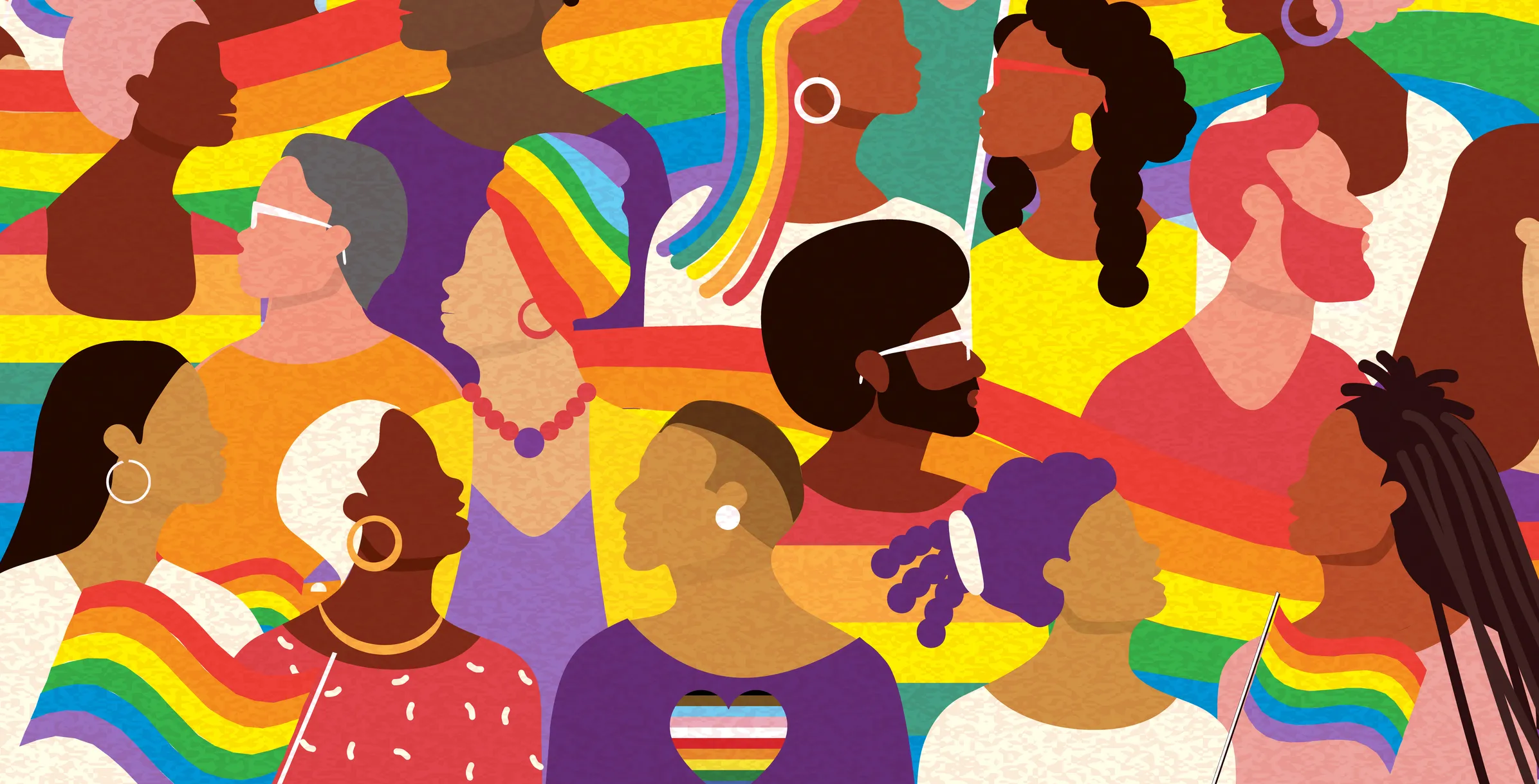
With Pride Month in full colourful swing, we’re sharing an NFP marketing project that’s already had a big impact on the LGBTIQ+ community – and one that our team is proud to have been a part of.
Working With LGBTIQ+ Health to Promote Gender-Affirming Care
Everyone has the right to fair treatment and respectful care. But when vital context is missing from standard healthcare procedures, patients can face frustrating barriers.
For decades, members of the trans, intersex, and gender-diverse communities struggled with accessing care that was right for their needs and respectful of their personal wishes. From communication challenges to misaligned policies, many found themselves repeatedly explaining important information while navigating a system that wasn't always designed to accommodate their experiences.
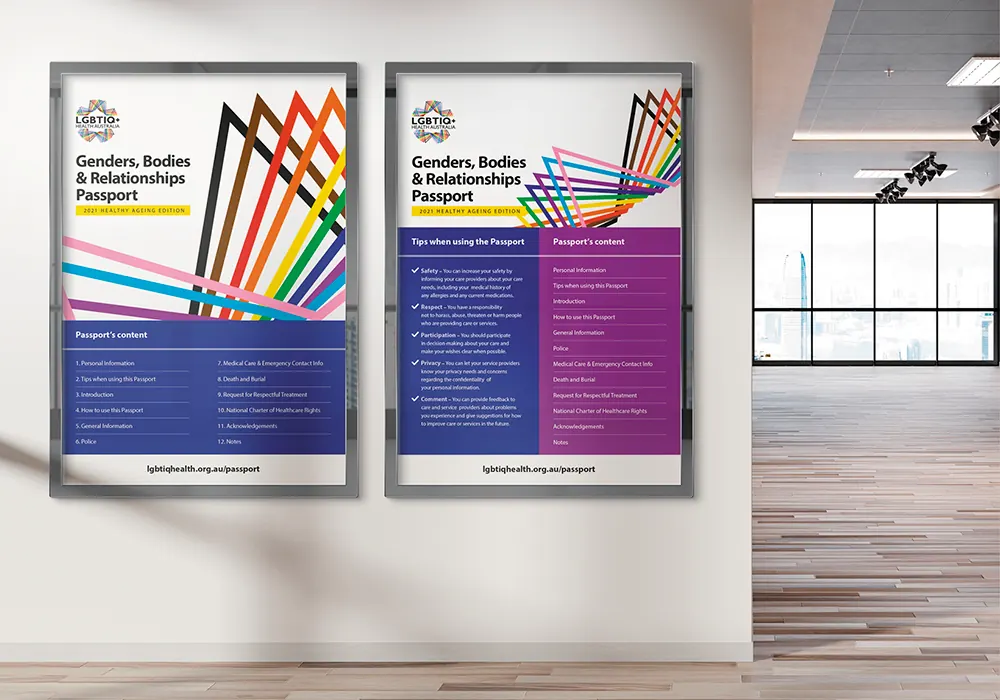
LGBTIQ+ Health – an organisation focused on improving the lives of LGBTIQ+ people – recognised the need for a practical solution. The Genders, Bodies and Relationships Passport would give individuals greater control over how important information is shared with healthcare professionals.
At the same time, it would support healthcare providers by presenting that information clearly, consistently, and in a way that aligns with legal requirements and best-practice care.
This simple concept had the potential to make a huge difference in many lives. So when the LGBTIQ+ Health team reached out to MIH for help bringing their bold vision to life, we were only too happy to get on board with this very worthy cause.
Creating Australia’s First Genders, Bodies and Relationships Passport
From the start, we knew this was no ordinary design project. The passport we were building would act as a vital resource that people could rely on during their healthcare journey.
As well as functioning as an official document that could be used across a range of healthcare settings – by people with diverse needs and experiences – it also needed to be practical enough for everyday use.
Each design decision needed to tie back to the document’s purpose: helping people communicate information that could directly affect the quality of care they receive.
With just six weeks to develop an initial mock-up, our creative team got to work on a functional, accessible document that would be simple to use by both patients and busy healthcare professionals.
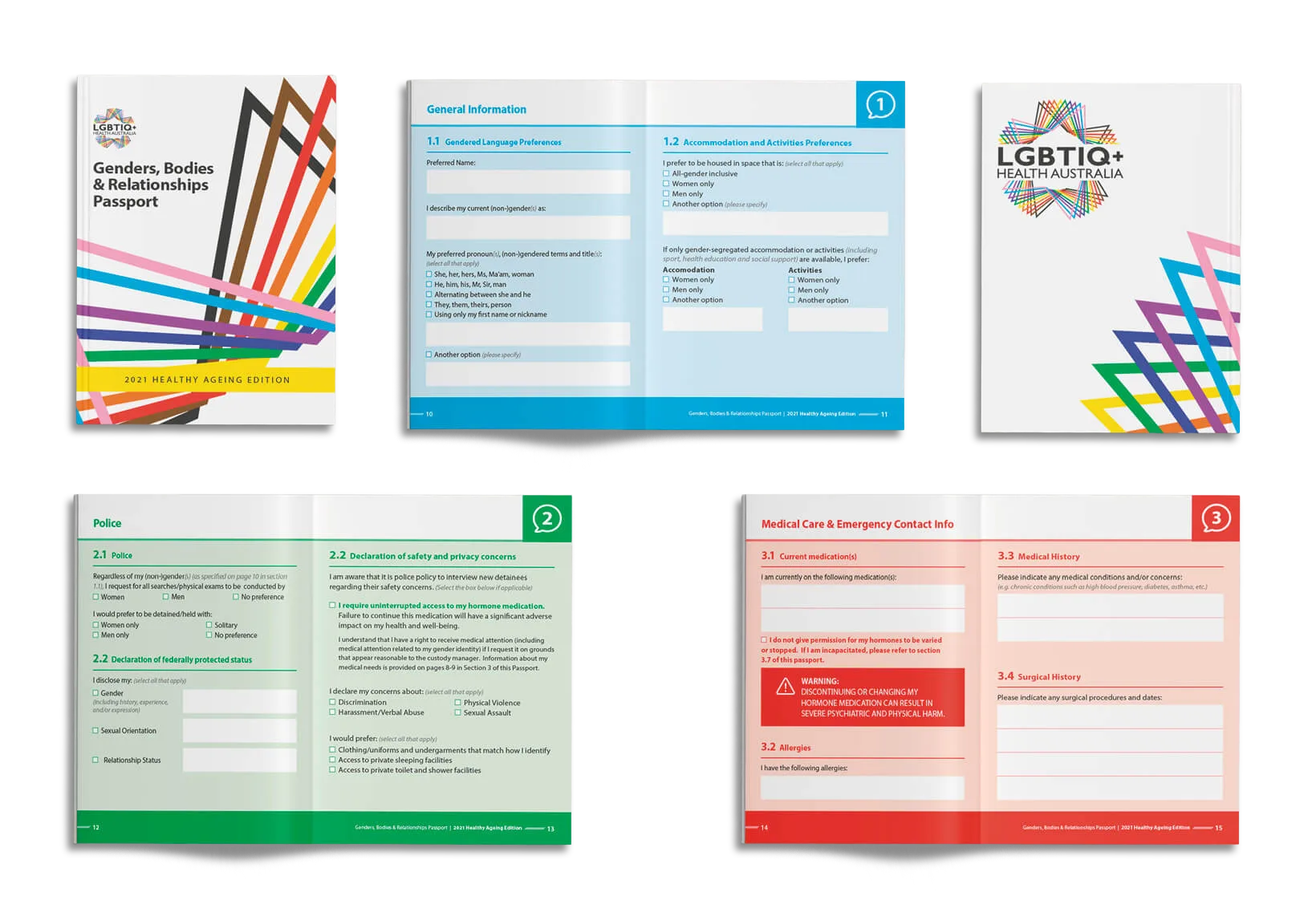
A Life-Changing Passport, Designed for Real Life
First on our list of requirements was functionality. Keen to avoid adding even more complexity to an already challenging environment, the document needed to be easy – to carry, update, and understand.
Next up, accessibility. We had to make sure the content was suitable for a broad range of community members, discreet enough to ensure privacy, and had a professional look and feel that matched its setting.
Working within these requirements, we developed a printed passport-style document that provided clear information about the rights of intersex, trans, and gender-diverse people, while allowing holders to include and update additional details that may affect their care.
The finished passport ticked all the boxes. From reception areas to community spaces, the Gender, Bodies and Relationships Passport has become a fundamental resource that drives open communication about a patient’s healthcare requirements.
A Lasting Impact on the LGBTIQ+ Community
The Passport may be small, but its repercussions have been mighty. With this one document, thousands of intersex, trans, and gender-diverse individuals have been better supported to receive the quality of care they deserve.
And when, six years after initial launch, LGBTIQ+ Health asked us to refresh the design, we were thrilled to contribute to this important project once again.
Working our design magic to update the original Passport, we ensured this crucial document remained current, accessible, and continued to meet the needs of patients and providers.
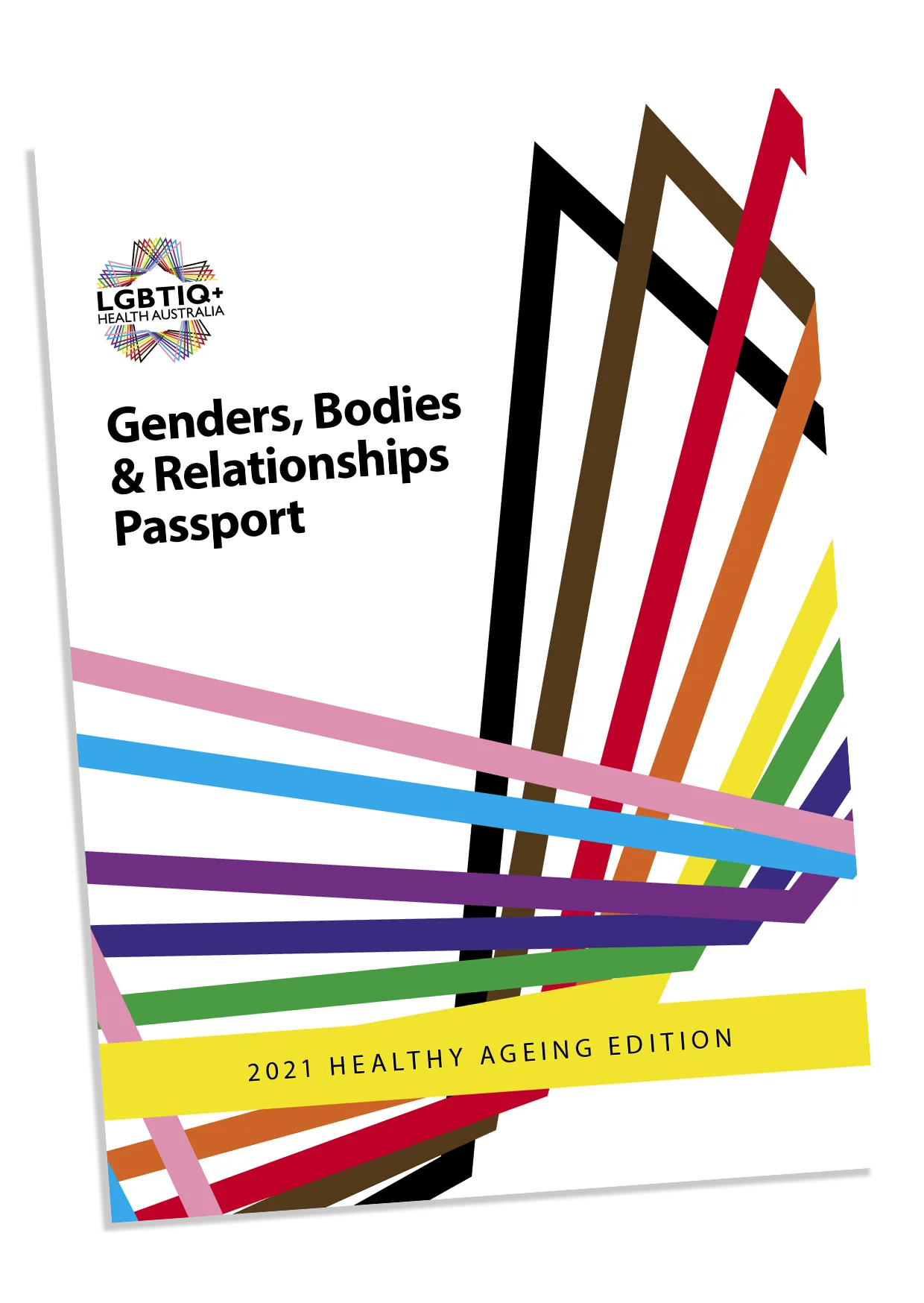
Make It Happen was an ideal design and print partner for our Genders, Bodies, and Relationships Passport Project. This project was the first of its kind for Australia, and our brief included requirements drawn from health, legal, and community sectors. MIH were able to move into this fresh conceptual territory with fluency and confidence. Their skilled approach means that we now have a document that is highly functional and accessible to a wide range of health consumers. MIH managed the production process better than any other group we have worked with - their attention to the print quality and custom design features was excellent. We couldn't recommend Make It Happen more highly.
Warren Summers, Membership and Communications Coordinator, LGBTIQ+ Health
As Pride Month shines a much-needed light on visibility, representation, and inclusion, this project reminds us that those conversations must be supported by practical action. Initiatives like the Genders, Bodies and Relationships Passport are proof of the life-changing difference this can make.